
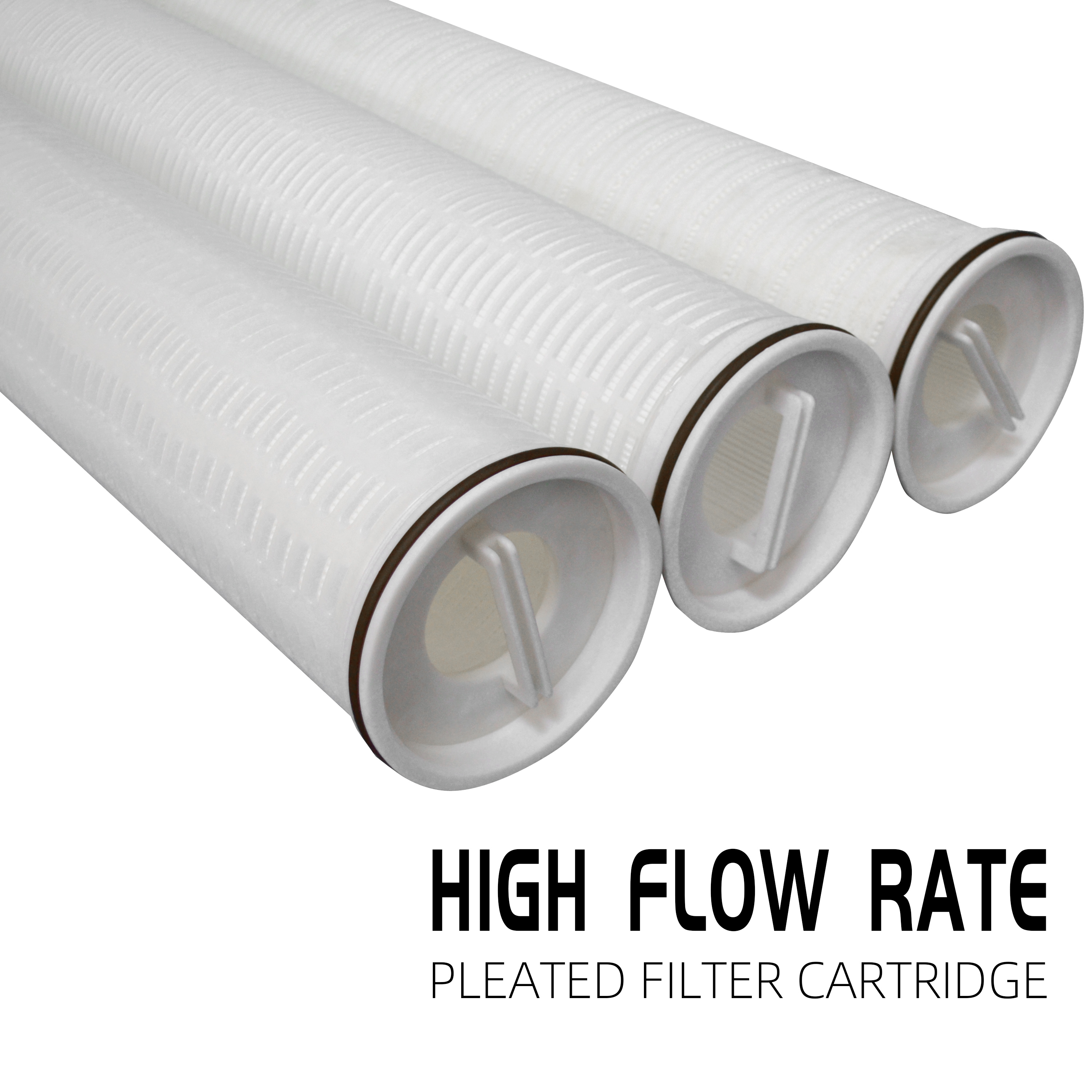
In the context of global water scarcity, the upgrading of industrial intelligence and the green and low-carbon transformation, the demand for high-flow filter elements, as a key filtration consumable, has been steadily increasing. The industry as a whole exhibits globalized, high-end, and rapid technological iteration characteristics, providing important support for efficient filtration solutions in various fields.
From a global perspective, there are three main directions. Firstly, overseas high-end application scenarios continue to upgrade. Regions such as North America, Europe, and Japan and South Korea have strong demand for high-flow filter elements in semiconductor, biomedicine, and petrochemical industries. Coupled with increasingly strict regulations such as the US EPA and EU REACH, the demand for high-quality and compliant filtration products has further increased. Secondly, green and low-carbon have become an industry consensus. The EU's "Circular Economy Action Plan" proposes that the recyclability rate of industrial filter materials should reach 70% by 2030. Leading enterprises in Europe and the US have begun to layout degradable and recyclable filter materials, promoting the entire industry to upgrade towards environmental protection. Additionally, global competition and cooperation coexist. International companies such as Pall and 3M continuously strengthen their technological advantages, while domestic brands, relying on cost-effectiveness and rapid response capabilities, gradually enter the mid-range markets in Europe and the US, achieving differentiated breakthroughs.
In terms of technological innovation, there is also a global linkage feature. Foreign enterprises focus on breakthroughs in filter materials and structural design. For example, Pall has launched an all-core folded high-flow filter element, with a single tube flow rate of up to 1900 lpm, effectively reducing the frequency of replacement and operational costs; BASF and Pall have collaborated to develop biodegradable filter elements that can completely degrade within 180 days, better meeting environmental requirements. At the same time, European, American, Japanese, and Korean enterprises accelerate the intelligence of filter elements, equipped with IoT sensing modules to achieve real-time monitoring of operating status, suitable for industrial automation scenarios; the application of new filter materials such as nanofibers and recycled polymer materials has also become the mainstream direction of global technological innovation.
In the future, the high-flow filter element industry will continue to develop towards higher flux, longer lifespan, recyclability, and intelligent monitoring. Our company will continuously benchmark relevant compliance standards in Europe, Japan, and South Korea, deepen international technical exchanges and cooperation, optimize products and solutions based on actual application needs in the overseas market, and with more suitable filtration technologies, contribute to the global industrial upgrade and green sustainable development.