

As a "deep-level filtration core consumable", melt-blown filter element are widely used in industrial fields such as water treatment, chemical engineering, food and beverage, and pure water production. Most purchasing and engineering technicians in the industry often have confusion in their selection process regarding filtration accuracy, specification parameters, and actual applicable working conditions. This article systematically sorts out the core selection basis for polypropylene melt blown filter element, deeply analyzes their key performance characteristics, and helps you make precise selection and application.
Filter accuracy is the core indicator for selecting spun depth filter element. Common accuracy grades include 1μm, 5μm, 10μm, 20μm, 50μm, and 100μm. The higher the accuracy grade, the stronger the ability to intercept fine particles, but the flow resistance also increases, and the pollutant capacity decreases accordingly. Large-diameter filter elements are suitable for front-end coarse filtration in processes, while high-precision small-diameter filter elements are mostly used in the terminal precise security filtration process.
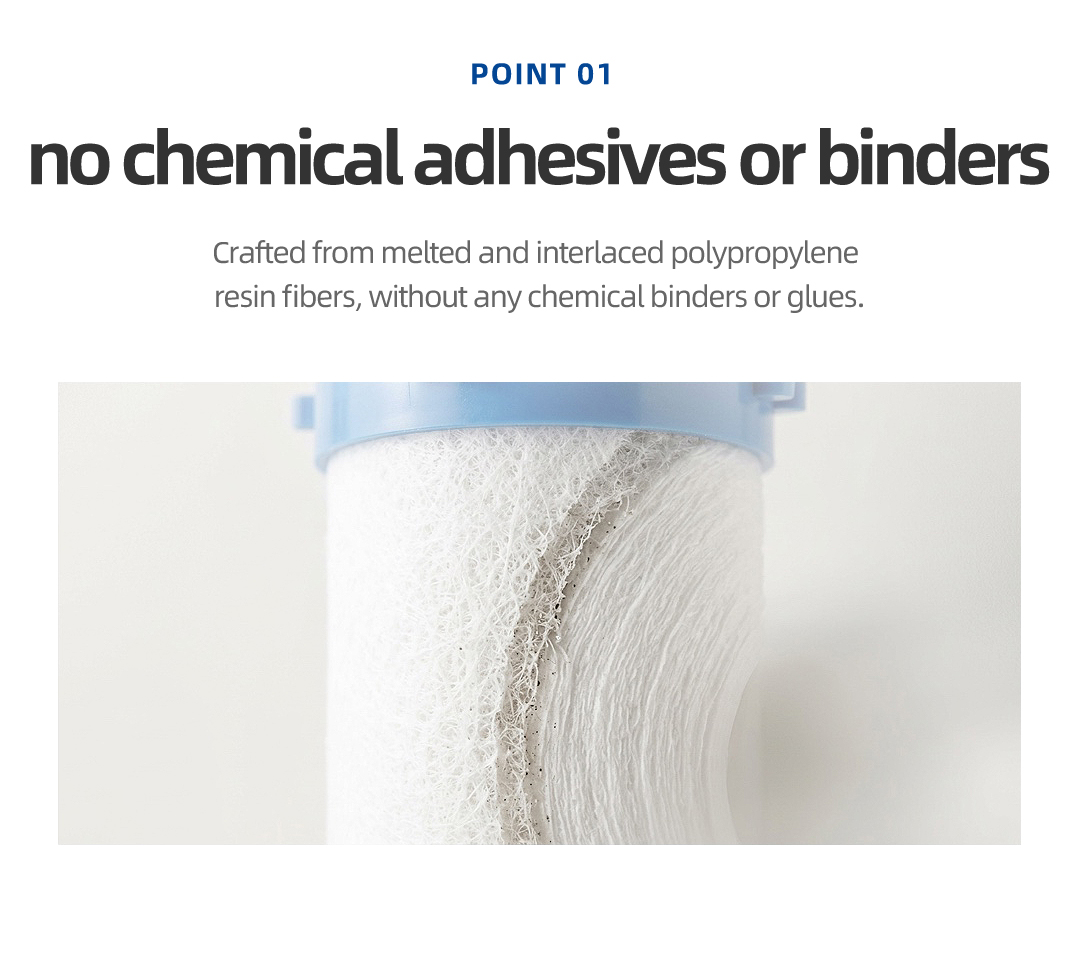
Secondly, pay close attention to the material and structure. The mainstream market material is PP (polypropylene) melt-blown material, which has the characteristics of being non-toxic, odorless, acid and alkali resistant, and corrosion-resistant, and is suitable for various water-based fluid filtration needs. The pp melt blown filter element adopts an overall hot-melt integrated molding process, without splicing or bonding gaps, and is less likely to have fiber shedding or medium powder falling during operation. It can avoid secondary pollution of fluids from the source and is particularly suitable for high-standard fluid filtration processes such as drinking water, pure water, and food and beverage.
In addition, it is necessary to strictly verify the shape dimensions and interface specifications of the filter element. The mainstream industry standards for length include 10 inches, 20 inches, 30 inches, and 40 inches. They can be universally compatible with various conventional security filter cartridges. When selecting, it is necessary to accurately determine the outer diameter, inner diameter, and end interface type of the filter element to ensure precise assembly alignment and tight end face sealing. This will prevent potential faults such as leakage, cross-flow, and filter failure during operation from occurring through process control.
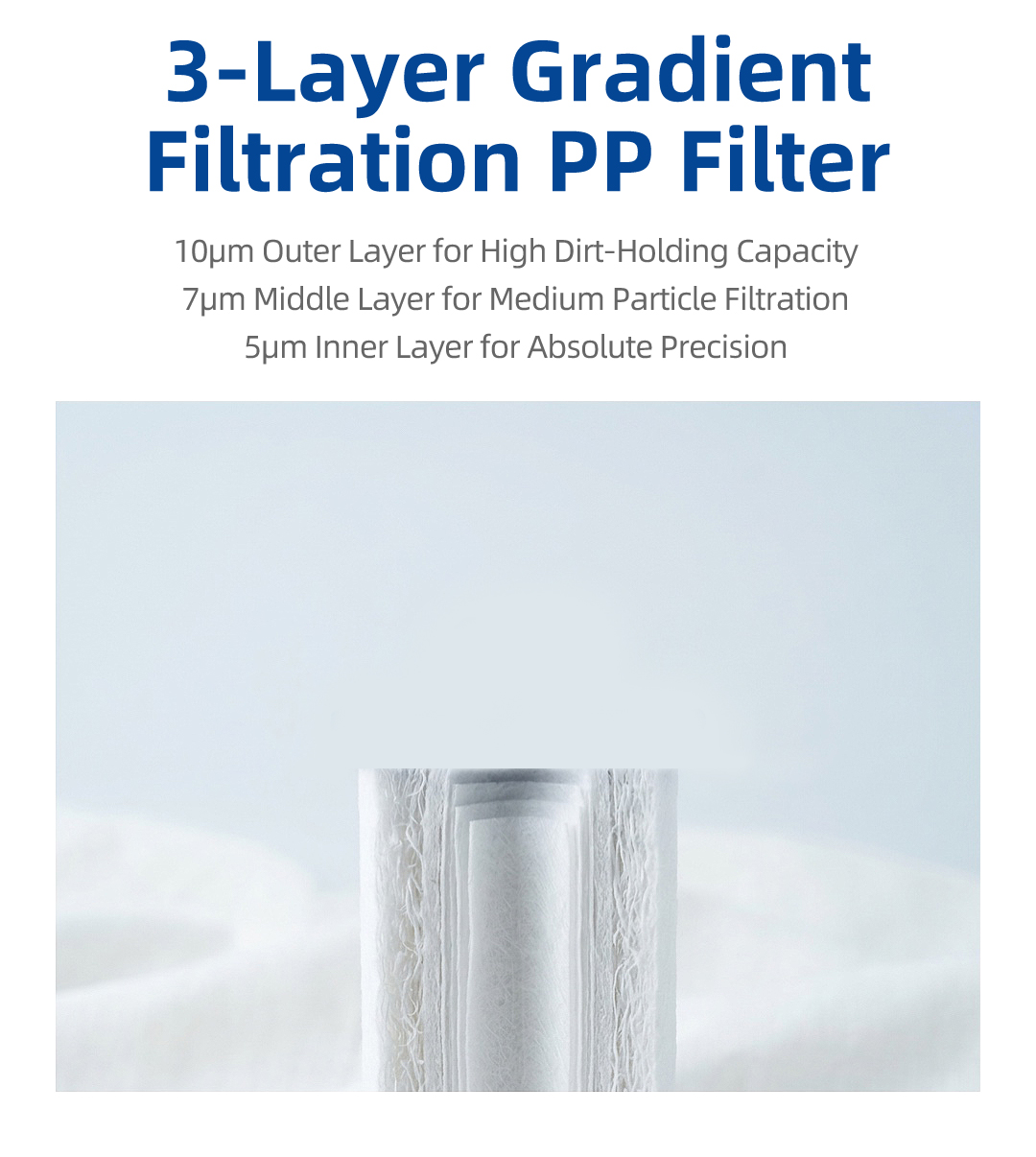
From the perspective of performance characteristics, pp spun filter element adopt a gradual pore size deep-level filtration structure, with large pollutant capacity and long service life; the gradient density design intercepts impurities layer by layer from the outside to the inside, and the filtration efficiency is stable. At the same time, it has good pressure resistance, does not deform under normal working conditions, the pressure difference increases slowly, and the replacement cycle is controllable. In addition, it has outstanding cost performance, moderate cost, convenient replacement, and no need for complex maintenance, making it a cost-effective choice for industrial pre-filtration and water treatment pre-treatment.
Reasonably grasp the three key selection points of accuracy, material, and size, and match the specifications based on the process flow and water quality impurities. Then, you can select a melt-blown filter element that is highly compatible and has stable filtration effect, effectively protecting the downstream equipment and reducing operation and maintenance costs.