

In the field of industrial water treatment and liquid filtration, pp melt blown filter cartridge, with their advantages of high cost performance, resistance to acid and alkali corrosion, strong deep-nutrient-capturing ability, and wide adaptability, have become the basic consumables of the filtration system. As a typical spun depth filter cartridge, the filter aperture is the core indicator determining the filtration effect, service life, and applicable scenarios. Many purchasing and operation personnel only consider the price when selecting pp spun filter cartridge and ignore the matching of the aperture, which easily leads to frequent filter blockage, non-compliance with filtration standards, and product loss problems. This article, based on mainstream aperture specifications of melt-blown filter element, elaborates on the corresponding applicable liquid conditions to help everyone make precise selections for polypropylene melt blown filter element and spun depth filter element.
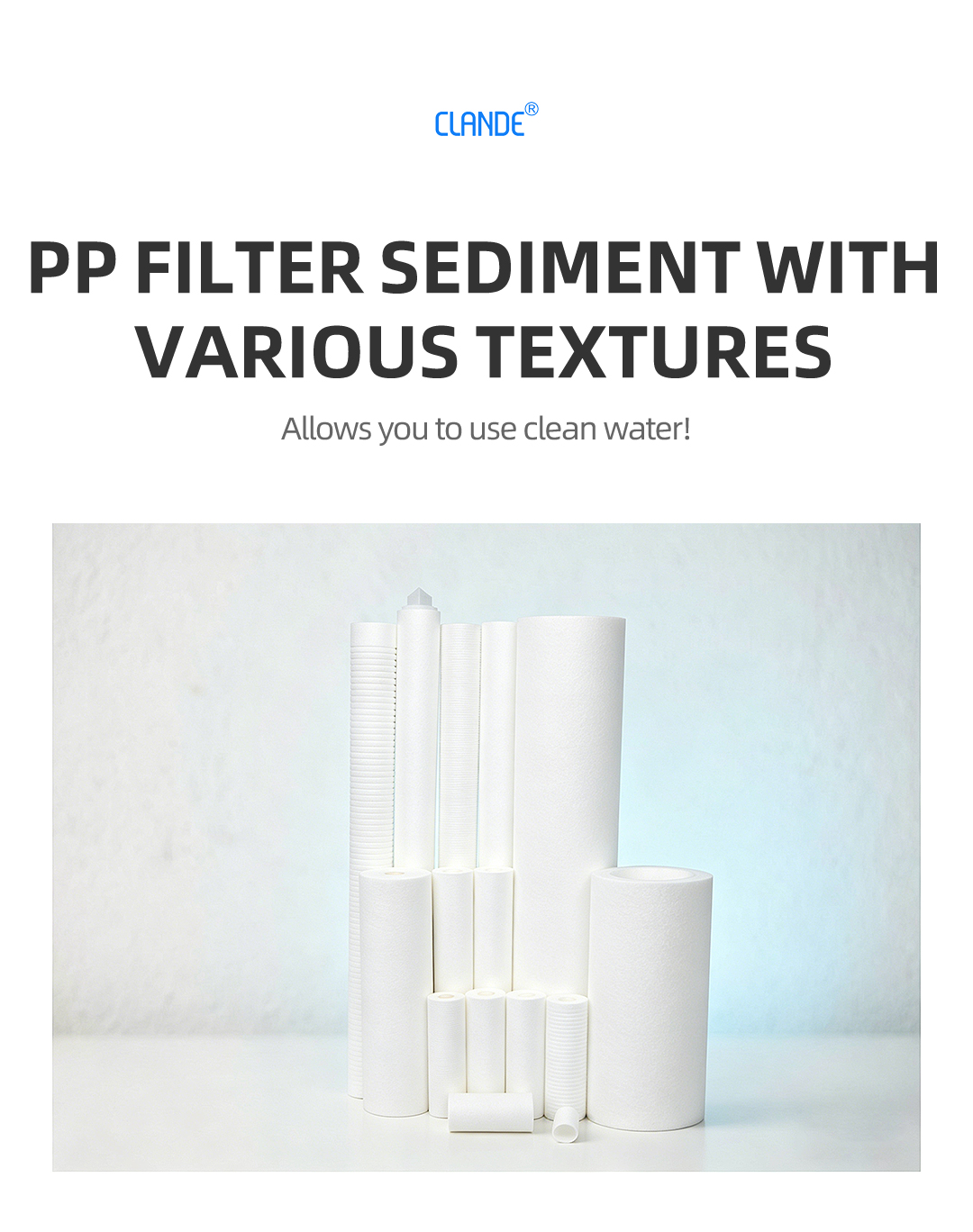
At present, the mainstream pore diameters of PP melt-blown filter elements in the industry include seven standard sizes: 0.1 μm, 1 μm, 5 μm, 10 μm, 20 μm, 50 μm, and 100 μm. These polypropylene melt blown filter element have certain fixed performance characteristics: the smaller the pore diameter, the stronger the filtration precision, and the resistance of fluid passage increases simultaneously; the larger the pore diameter, the better the flux performance of the spun depth filter element, and only large particle-sized suspended impurities can be retained. The performance of each precision type ofmelt-blown filter element is significantly different, and they can be respectively adapted to different operation stages in the entire filtration system, such as primary pretreatment, mid-level precision filtration, and end-level deep purification for all types of pp melt blown filter cartridge and pp spun filter cartridge.
The 50–100μm ultra-large aperture filter is mainly used for primary coarse filtration and is the first choice for high-impurity conditions. This specificationpp spun filter cartridge only intercepts sand, rust, fibers, and large particle suspended substances, has very little water flow resistance, and is not prone to clogging. It is mainly used for groundwater, well water pre-treatment, circulating cooling water, large swimming pool water circulation filtration, and is also suitable for preliminary impurity removal in industrial wastewater, which can effectively reduce the workload of subsequent precisionspun depth filter cartridge and lower the overall material cost ofpp melt blown filter cartridge.
The 10–20μm medium-large aperture filter is an industrial general model and is currently the most widely used specification of melt-blown filter element. Compared with coarse filter filters, it can intercept fine dust, colloidal debris, and fine sediment, balancing water flow and filtration accuracy of the polypropylene melt blown filter element. It is commonly used for water purification, injection cooling water, ordinary chemical wastewater filtration; it is also suitable for oil products such as lubricating oil, cutting fluid, and diesel for industrial oil purification, and is suitable for most small and medium-sized factory basic liquid filtration scenarios using spun depth filter element.
The 1–5μm small aperture filter is positioned for precise pre-filtration among various pp melt blown filter cartridge. 5μm is the standard aperture for pure water equipment, mainly used for RO reverse osmosis equipment pre-filtration, primary purification of food and beverage raw materials, and pre-treatment of electroplating solutions; 1μm has a higher accuracy and can intercept fine colloids and microbial impurities via professional pp spun filter cartridge, suitable for refined filtration of bottled water, juice, beer, etc., and can also be used for secondary filtration of pure water in the electronics industry with high-grade melt-blown filter element.
The 0.1μm ultra-fine aperture filter belongs to high-end precision filtration consumables of polypropylene melt blown filter element. This specification is close to the sterilization level and can filter bacteria and ultra-fine colloids. The water flow resistance is high and the nutrient-capturing capacity is limited. It is not suitable for high-impurity raw materials. It is mainly used in pharmaceutical liquid, medical purified water, semiconductor ultra-pure water, and fine chemical solvent filtration by adopting high-precision spun depth filter cartridge and spun depth filter element, mostly used at the end of the filtration system to ensure liquid cleanliness compliance.
Finally, it is recommended that enterprises adopt the "multi-level combination" mode: large aperture coarse filtration pp spun filter cartridge to intercept large impurities, small aperture precision filtrationpp melt blown filter cartridge to optimize water quality, and hierarchical filtration can extend the service life of the melt-blown filter element by more than 30%, and can also ensure filtration quality. Selecting the aperture of polypropylene melt blown filter element and spun depth filter element based on the turbidity of the water, the viscosity of the liquid, and the pressure of the equipment is the most cost-effective selection scheme.