

In industrial fluid filtration and water treatment systems, the wire-wound filter element is one of the most widely used basic filtration consumables. With its stable structure, large filtration capacity, strong adaptability, and high cost-effectiveness, the Polypropylene string wound filter element is widely used in the pre-treatment process, effectively intercepting fluid impurities and protecting the downstream precision equipment and filter elements. Although many industry operation and purchasing personnel are frequently exposed to it, they do not have a comprehensive understanding of its core principle and applicable scenarios. This article provides a detailed explanation of the basic characteristics, filtering principle, and mainstream applicable industries of the yarn depth filter element.
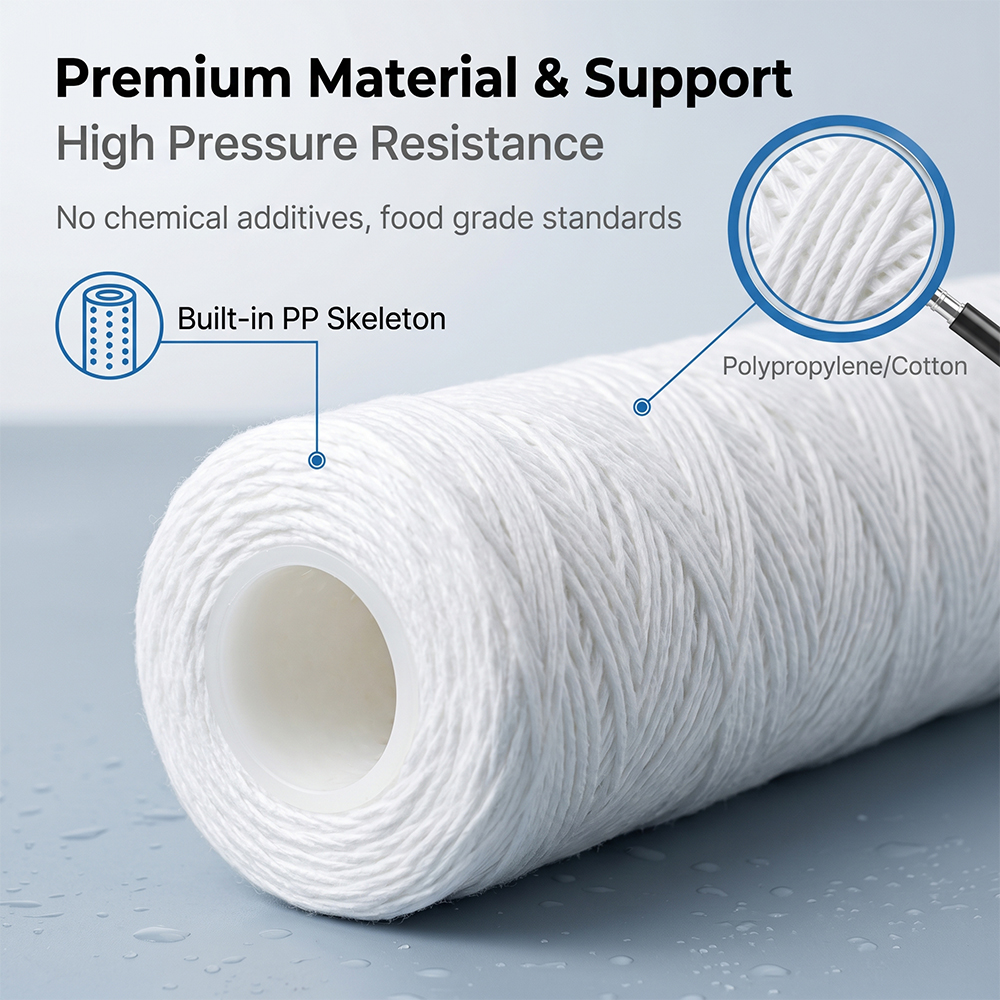
The wire-wound filter element is also known as an annular filter element. It is made by precisely winding textile fiber wires onto a porous support frame. Common fiber materials include PP polypropylene fibers, absorbent cotton, and glass fibers, and the frame is divided into plastic and stainless steel types. The pp string wound filter element adopts a gradually changing pore size structure, forming an outer layer that is loose and an inner layer that is dense, different from ordinary flat filter elements. It is a typical deep-layer filtration consumable. The regular specifications range from 10 inches to 40 inches and can be adapted to most conventional filtration equipment for yarn filter element.
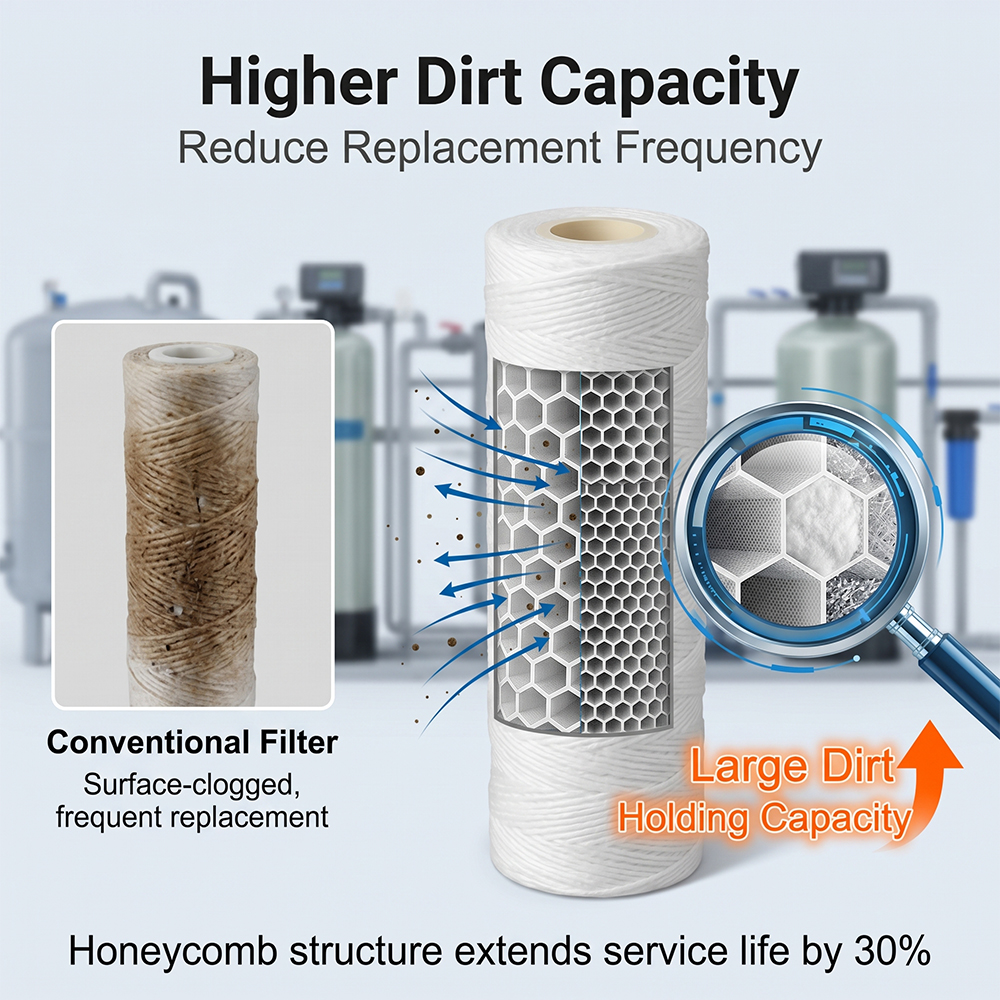
The core filtering principle of thewire-wound filter element is gradual deep-layer filtration. Fluid flows from the outer layer of the filter element, large particles of impurities are intercepted by the loose outer layer fibers, and fine particles, colloids, and suspended substances are adsorbed and retained layer by layer by the dense inner layer fibers during the fluid penetration process. This layered filtering structure has significant advantages, not only can it intercept different particle sizes of impurities in a graded manner, significantly increase the filtration capacity, delay the clogging speed of the Polypropylene string wound filter element, but also effectively prevent impurities from penetrating, ensuring the cleanliness of the effluent and effusion. At the same time, the yarn depth filter element has no dead corners and is filtered uniformly, enabling precise filtration of 1μm to 100μm.
Compared with meltblown and folded filter elements, the greatest advantage of the wire-wound filter element is its strong resistance to impurity impact and longer service life. It is especially suitable for high-impurity and high-turbidity fluid pre-treatment scenarios. The structure is sturdy and not prone to deformation, can be adapted to low-pressure to medium-pressure filtration conditions, and the material selection range is wide, able to meet the needs of various industrial conditions such as ordinary water treatment, high temperature, and corrosion resistance of pp string wound filter element.
With excellent comprehensive performance, the wire-wound filter element is suitable for multiple mainstream industries. The water treatment industry is its core application scenario, often used in RO membrane pre-filtration of pure water and water purification equipment, intercepting sand, rust, and suspended substances, protecting reverse osmosis membrane elements, significantly reducing equipment operation and maintenance costs. In the chemical and coating industries, the yarn filter element can filter resins, glue, dyes, and chemical solvents, removing lumps and particle impurities, ensuring uniform color of coatings and stable product quality.
In the electroplating and surface treatment industries, the Polypropylene string wound filter element is used to filter electroplating solutions and cleaning solutions, effectively reducing pinholes and particle defects in the coating, and improving the yield of electroplated products. In the food and beverage, and light industry industries, food-grade absorbent cotton wire-wound filter elements are selected to filter wine, syrup, fruit juice, ensuring food hygiene standards. Moreover, in mechanical lubricating oil, cutting oil filtration, electronic, and photovoltaic ultra-pure water pre-treatment scenarios, the yarn depth filter element also has an irreplaceable role.
In summary, thewire-wound filter element is the "first barrier" of industrial filtration, with a simple structure but extremely strong practicality. Mastering its principle and applicable scenarios, combined with precise selection based on the working conditions, can not only improve the filtration effect but also effectively reduce equipment wear and tear and filter element replacement costs, making the pp string wound filter element and yarn filter element cost-effective filtration solutions in industrial production.