

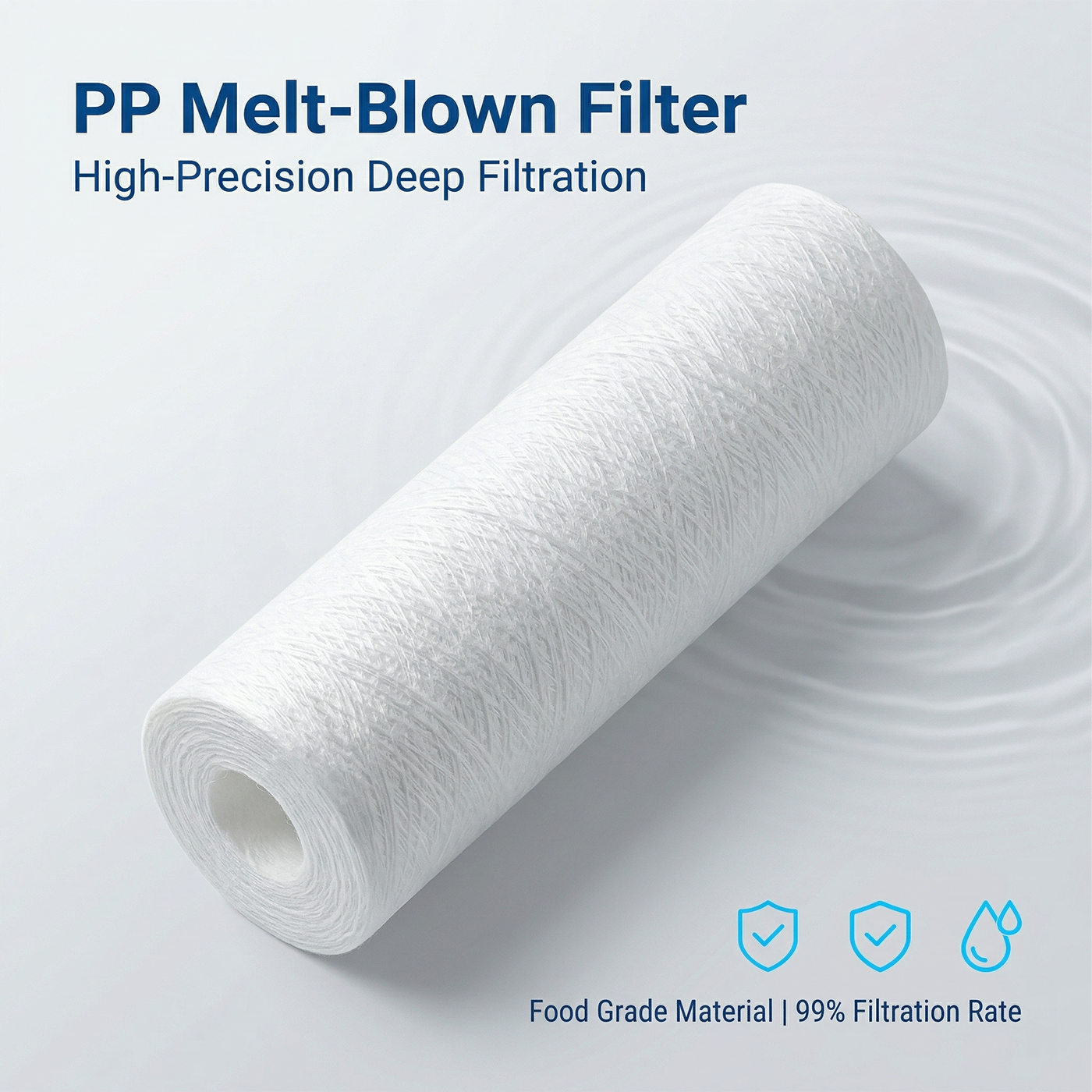
In industrial liquid filtration and pure water preparation systems, polypropylene melt blown filter element are the most commonly used shallow-layer filtration consumables. Compared with traditional filter elements such as wire winding and weaving, the greatest core competitiveness of melt-blown filter element lies in their unique gradient gradual structure. Many users only know that its filtering effect is stable, but they do not understand its filtering mechanism and structural advantages, which leads to the inability to fully utilize the performance of the filter element and result in material waste. This article deeply analyzes the filtering principle of pp melt blown filter element and compares and elaborates on the technical advantages of the gradient structure to help enterprises achieve scientific selection and cost reduction and efficiency improvement.
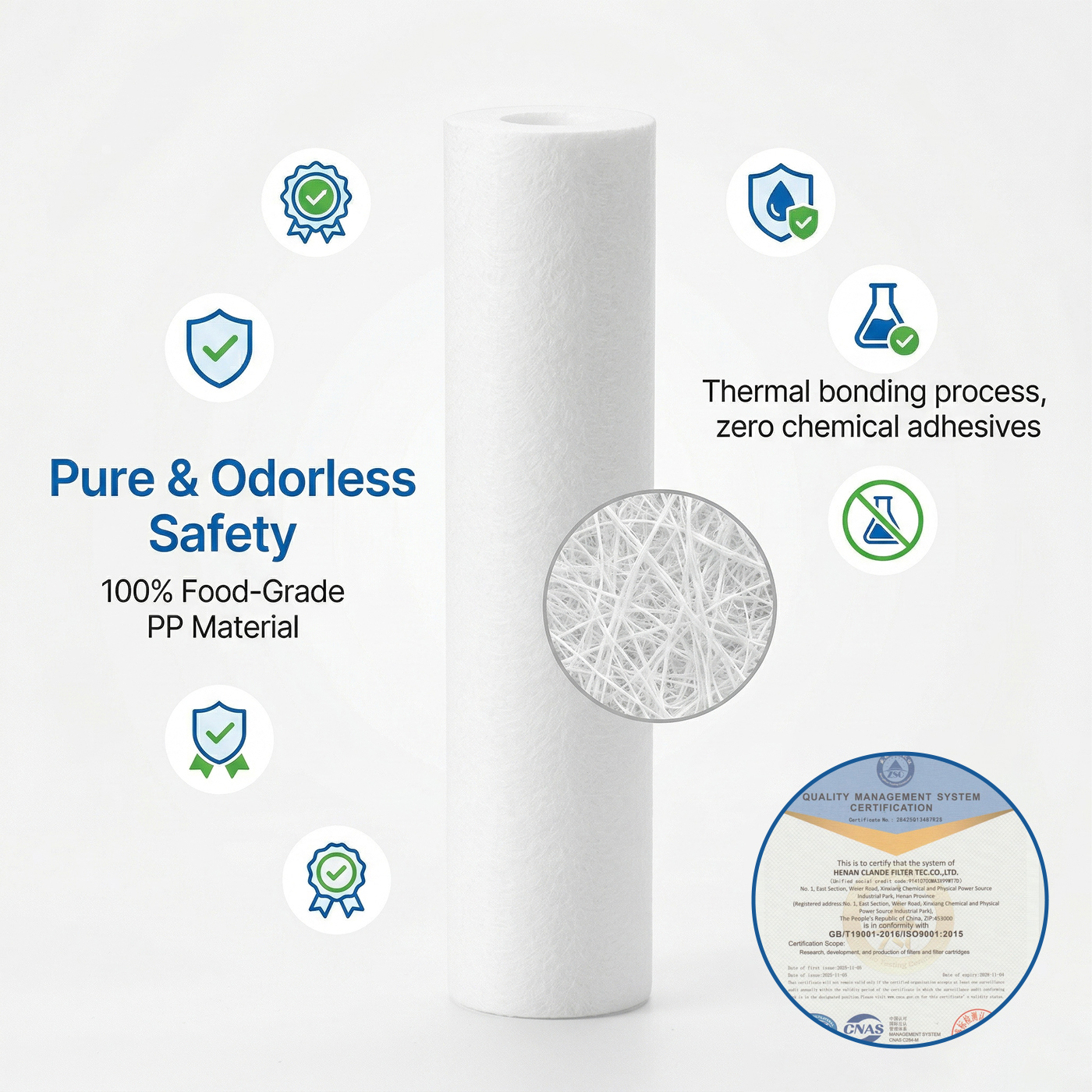
pp spun filter element are made using a hot melt spinning and self-adhesive integrated molding process with polypropylene raw materials. There is no any glue bonding, and the material is pure and resistant to acid and alkali, as well as corrosion. Its filtering principle combines multiple functions such as sieving, interception, adsorption, and deep retention. Traditional filter nets rely only on surface sieving and can only intercept particles larger than the mesh size; while spun depth filter element have an unordered and interlaced three-dimensional fiber pore structure. When fluid flows through the filter element, large particle impurities are physically screened and retained, while fine colloids and suspended particles are captured through electrostatic adsorption and pore retention, achieving an upgrade from surface filtration to deep filtration, with more comprehensive filtering accuracy.
Most ordinary and affordable filter elements on the market are of homogeneous structure, with consistent inner and outer hole diameters and uniform pore distribution. The drawbacks of such filter elements are very obvious: impurities are only concentrated on the surface of the filter element, and the surface pores quickly get clogged, while the internal pores are completely unusable. Not only is the absorption capacity small, but the equipment pressure difference also rises rapidly, and the filter element service life is significantly shortened. In high-impurity working conditions, it is prone to frequent scrapping.
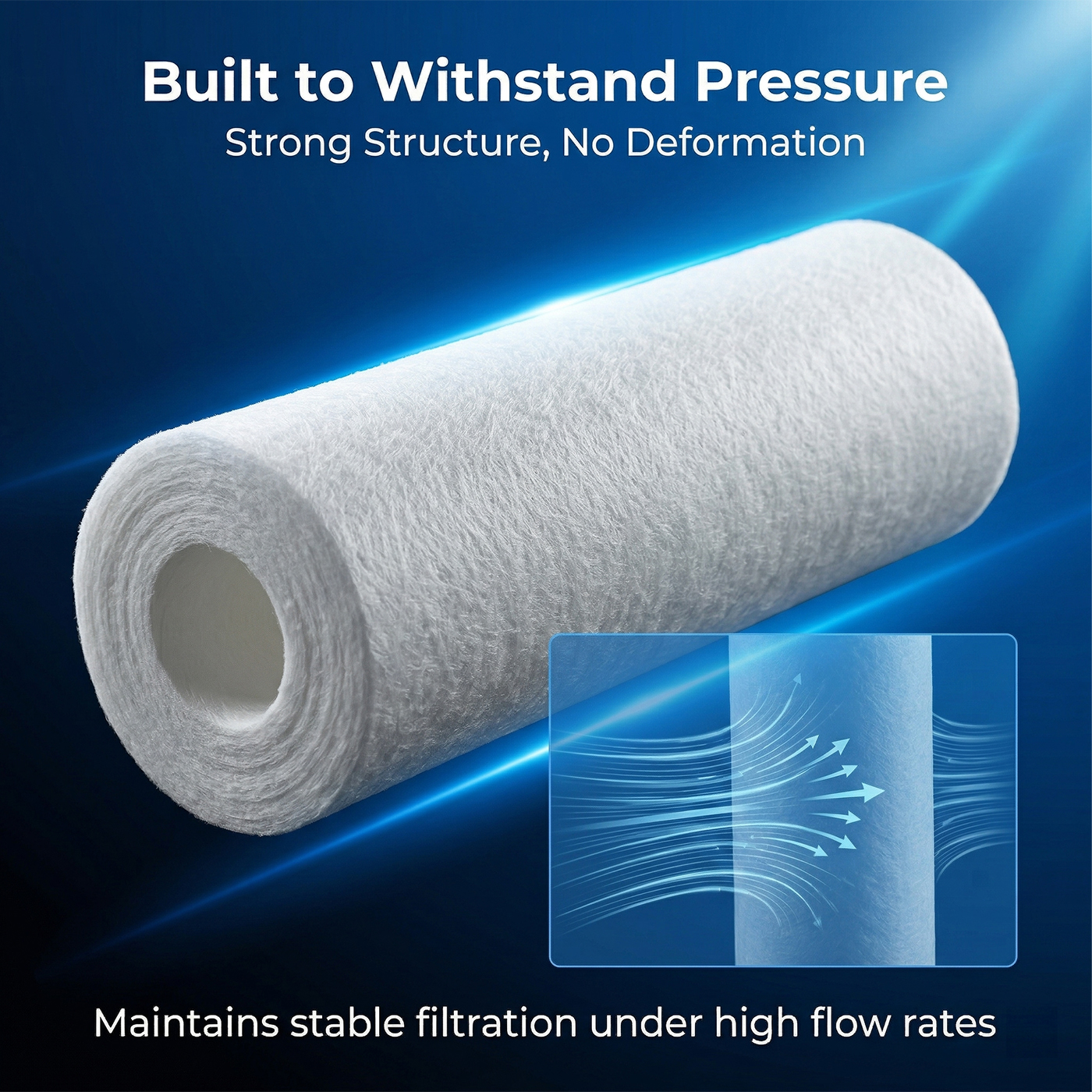
Gradient structure meltblown filter elements completely solve the industry pain points of homogeneous filter elements. They adopt an outer sparse and inner dense, gradually decreasing pore size design. The outer layer of the filter element has a larger pore size, which can prioritize the interception of water rust, sand, suspended matter, etc., large-volume impurities, and undertake the primary filtration task; the middle layer pores gradually contract, intercepting medium-sized particles; the inner layer has the most fine pores, precisely capturing fine colloids and tiny particles, completing precise purification. The layered and graded filtering mode allows the filter element to absorb impurities layer by layer from the outside to the inside, fully utilizing the overall filtering space.
Thanks to its unique gradient structure, this filter element has three core advantages. First, the absorption capacity is significantly increased, avoiding impurities from accumulating on the surface and blocking, and the service life is improved by more than 30% compared to homogeneous filter elements; second, the pressure difference stability is better, the water flow rate is uniform, and there is no problem of sudden drop in flow rate, suitable for continuous industrial production; third, the filtering accuracy is more precise, the graded filtration effectively avoids the penetration of fine impurities, and the water quality is more stable.
In conclusion, the gradient structure is the core key for PP meltblown filter elements to adapt to complex industrial working conditions. When enterprises purchase and select, they should preferentially choose gradient integrated meltblown filter elements, which can effectively reduce pressure loss in the filtration system, reduce the frequency of filter element replacement, and maximize the savings in production materials and operation costs while ensuring the fluid filtration meets the standards, suitable for filtration scenarios in water treatment, chemical, food, electronics, and other industries.