
Chemical water treatment covers complex working conditions such as process circulating water, chemical wastewater pre-treatment, chemical agent filtration, and pure water production. It features complex water impurities, strong chemical corrosion, large system flow, and continuous operation requirements. Traditional melt-blown filter elements have shortcomings such as low pollutant capacity, rapid pressure rise, and poor corrosion resistance, making them difficult to adapt to the strict chemical working conditions. This is the core reason why chemical water treatment projects in the industry generally preferlarge flow filter element as the core security filtration consumable at present.
1. Adaptation to large-flow continuous operation in chemical production
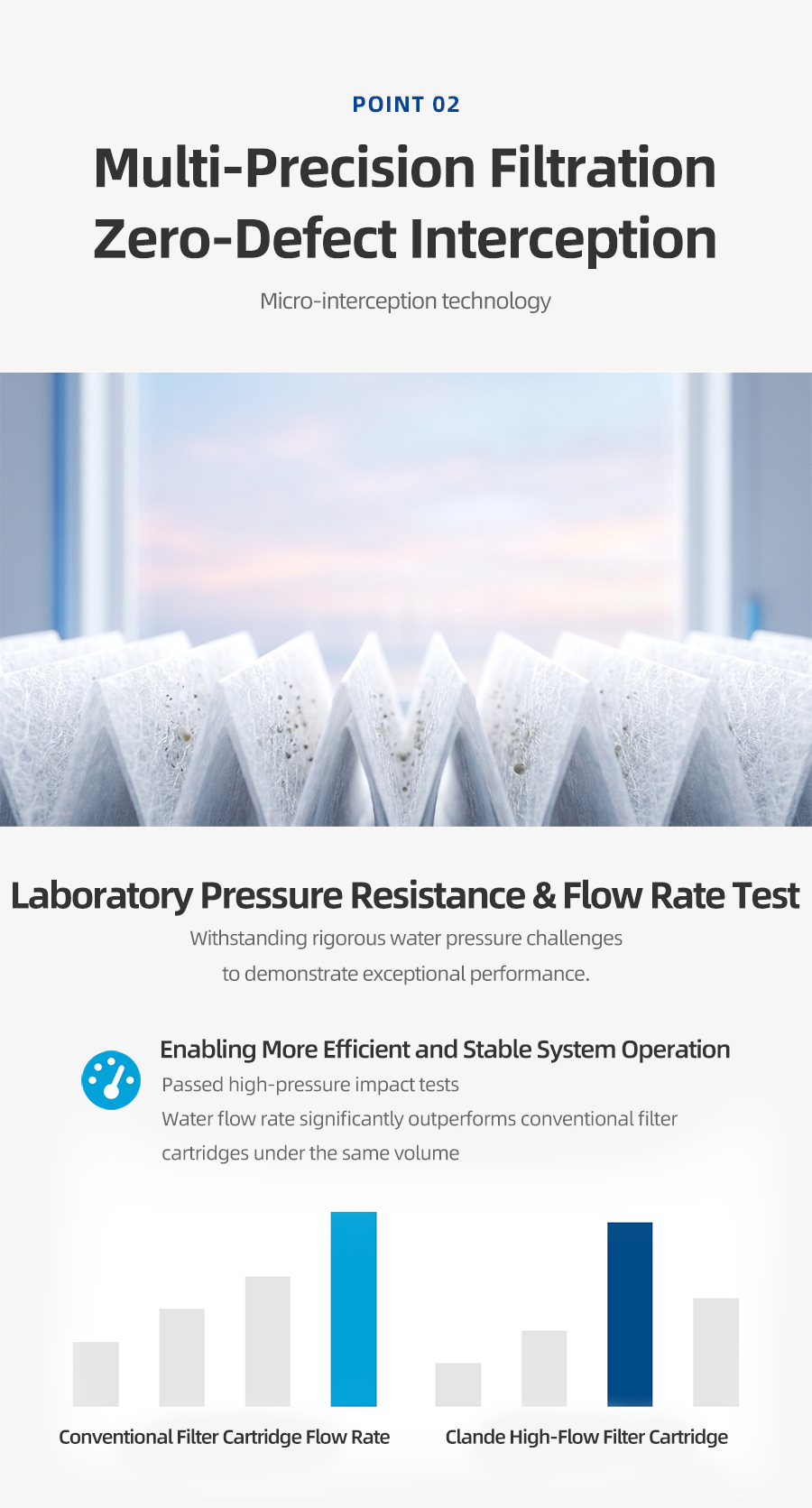
Chemical production is mostly in a 24-hour non-stop continuous operation mode, and the water treatment system has a large hourly water flow. Traditional small-flow filter elements require dense arrangement, and the filter tank body is bulky and the operation is cumbersome. high flow pleated filter element adopt a radial pleated structure design, with a single branch flow capacity reaching 8-10 times that of conventional filter elements. Under the same water treatment scale, it can reduce the number of filter elements by more than 70%, simplify the internal structure of the filter, and meet the demand for large-flow water supply while avoiding the uneven water distribution and local overload problems caused by parallel connection of multiple filter elements, adapting to the high-load operation requirements of the chemical system.
2. High pollutant capacity to adapt to complex impurity water quality
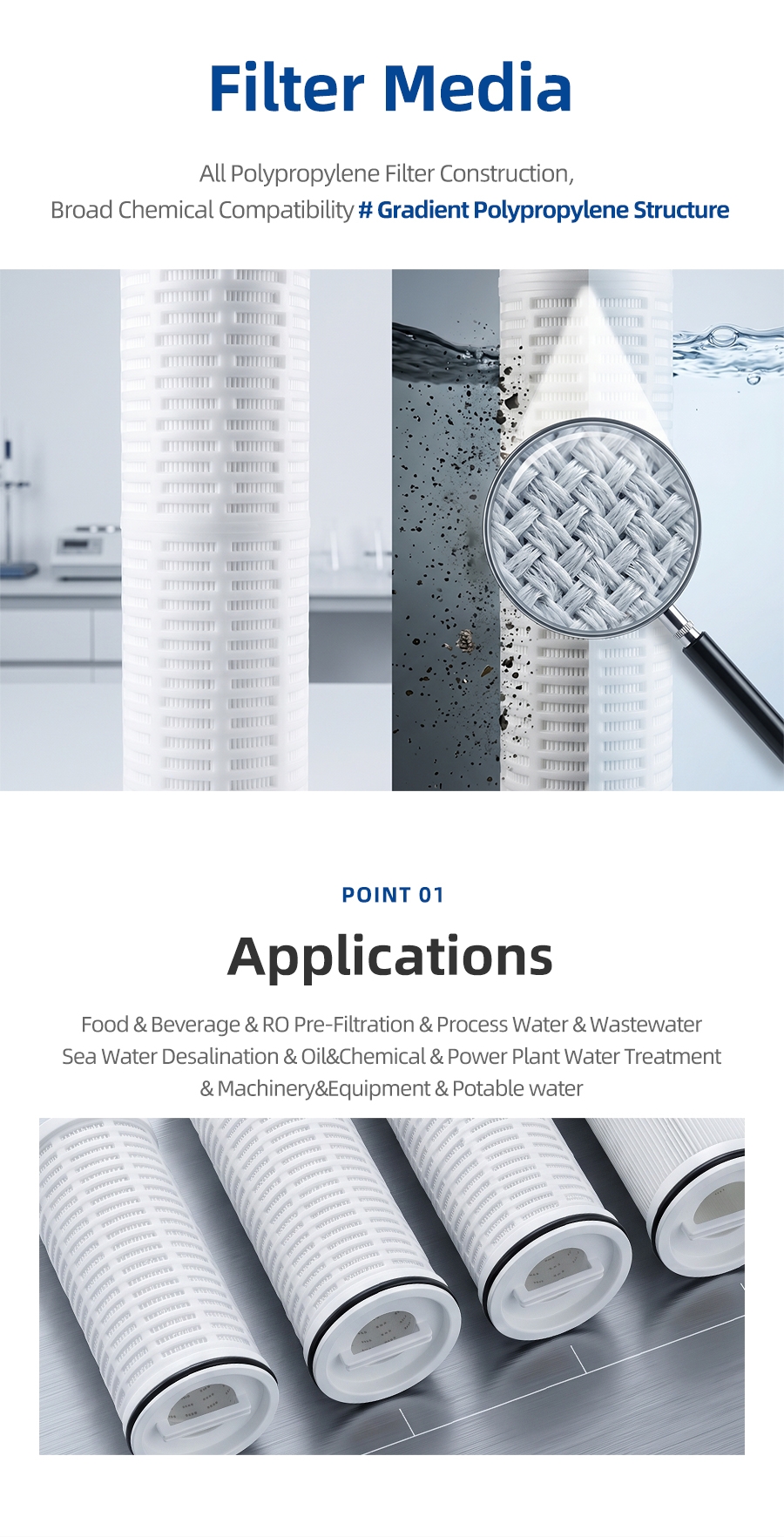
Chemical raw water and circulating water contain catalyst powder, salt crystal, colloidal suspended matter, corrosion iron filings and other composite impurities, which are prone to quickly clog the filter element surface. large flux filter element adopt a gradient deep filtration structure, with the outer layer coarse filtration to intercept large particles and the inner layer fine filtration to retain fine colloids, achieving layered pollutant absorption. Compared with filter elements of the same specification, the pollutant capacity is increased by 4-6 times, effectively delaying the pressure rise speed, significantly extending the replacement cycle, and avoiding production shutdown caused by frequent filter element blockage.
4. Cost reduction and efficiency improvement, optimizing overall operation and maintenance costs
From the perspective of operation and maintenance, the fewer filter elements and longer replacement cycle of high flux filter element significantly reduce the labor disassembly, storage cost of consumables. Stable low-pressure operation state can reduce pipeline transportation energy consumption, and precisely protect core equipment such as reverse osmosis membranes, heat exchangers, and precision instruments at the rear end, reducing equipment failure and maintenance costs caused by impurity wear, achieving the optimal long-term overall operation and maintenance cost.
Summary
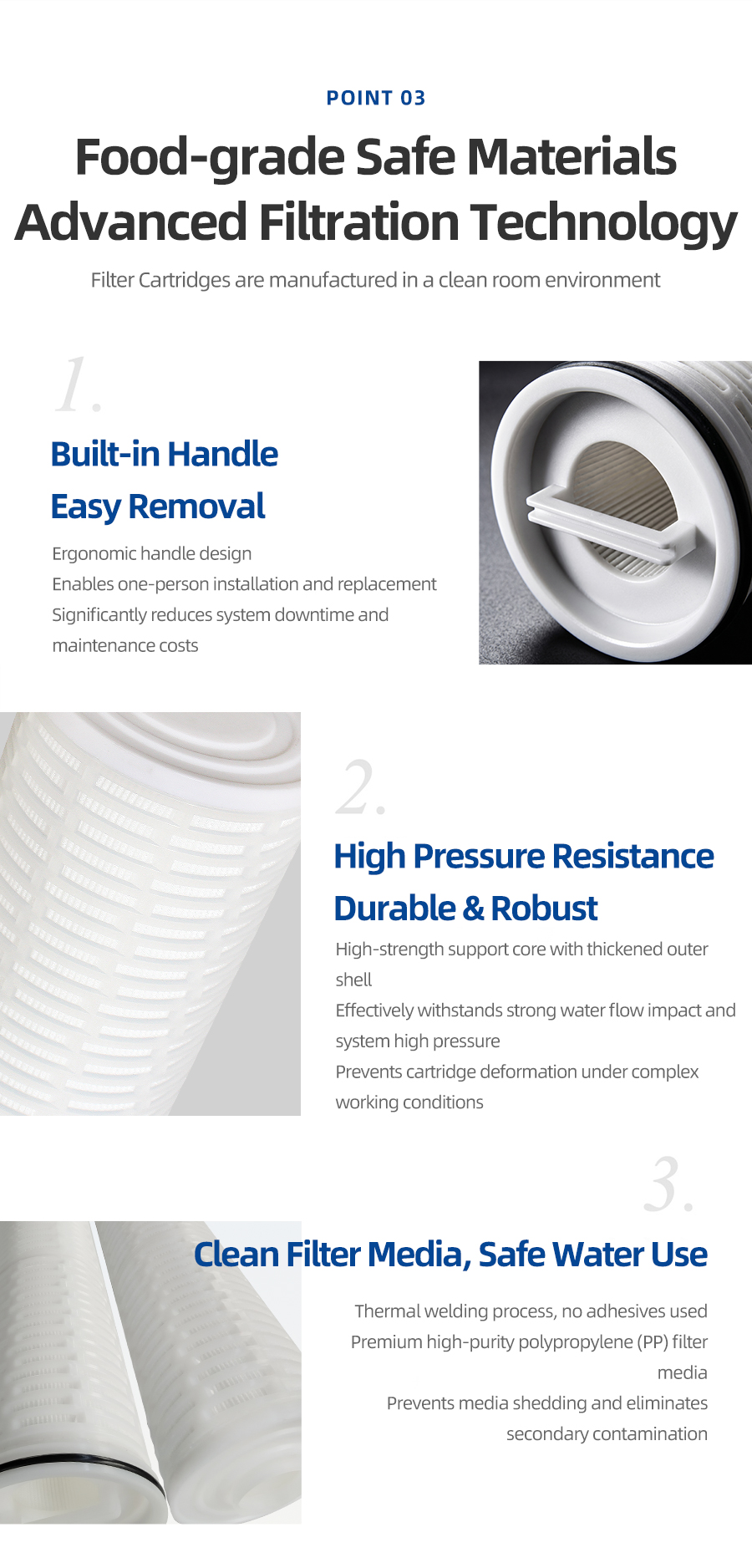
In conclusion, the high flow water filter element, with its four core advantages of high flow capacity, strong pollutant retention and anti-blocking performance, strong corrosion resistance, and low operation and maintenance costs, precisely matches the demanding conditions of chemical water treatment. Compared to traditional filter elements, it is more suitable for the continuous, complex, and high-precision filtration requirements of the chemical industry. It is currently the optimal choice for replacing traditional filter elements in chemical water treatment systems to achieve stable operation and cost reduction and efficiency improvement of the system.