

In the selection process of industrial fluid filtration, the pore size, filtration accuracy, and pressure difference are the three core technical parameters. Most purchasers and operators only refer to the micrometer values and ignore the interlocking logic among the parameters, often resulting in issues such as false marking of accuracy, rapid clogging of the pp melt blown filter cartridge, insufficient equipment flow, and damage to membrane elements. This article explains the professional definitions, determination criteria, and interlocking relationships of the three parameters in a simple way, helping engineers quickly understand the parameters and accurately select to reduce costs.
1. Pore size: The physical size benchmark of the pores
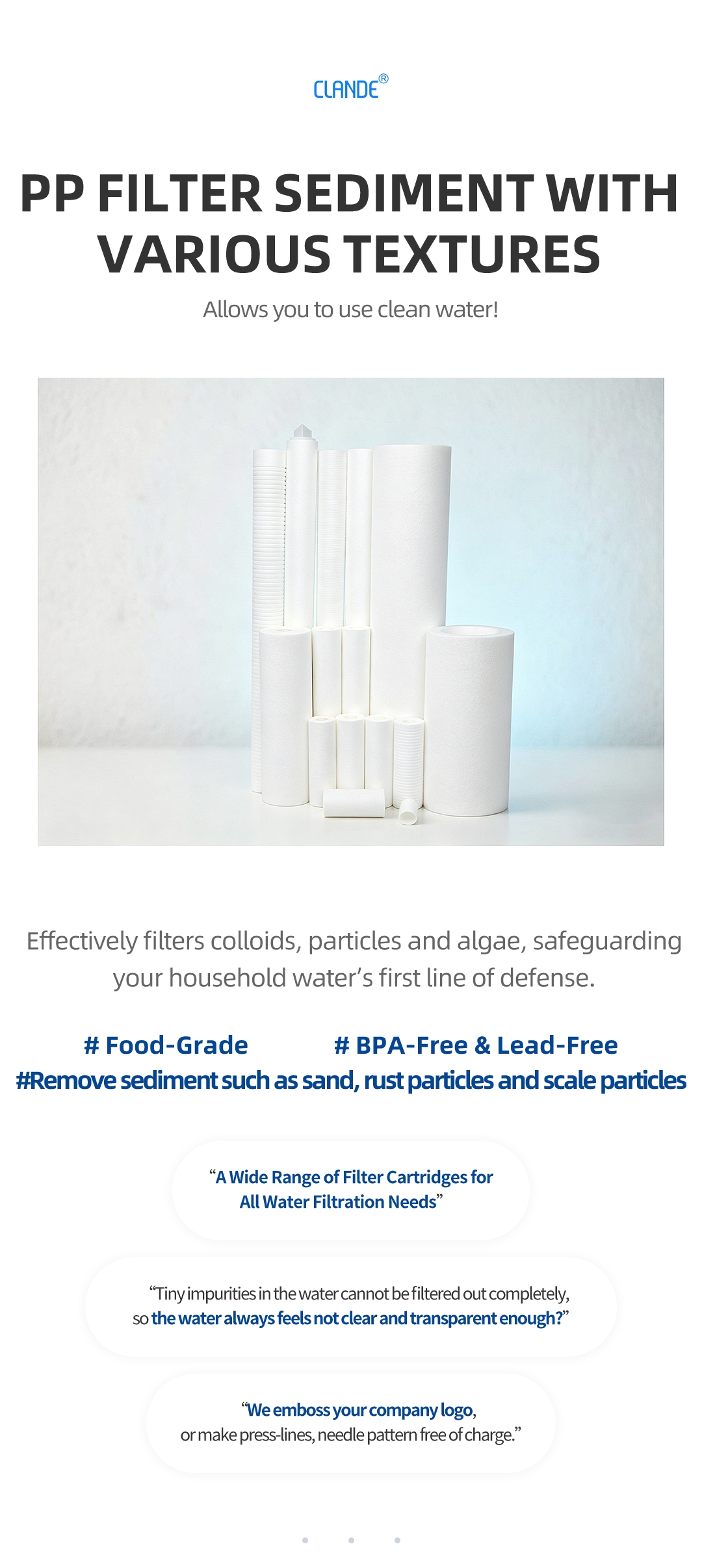
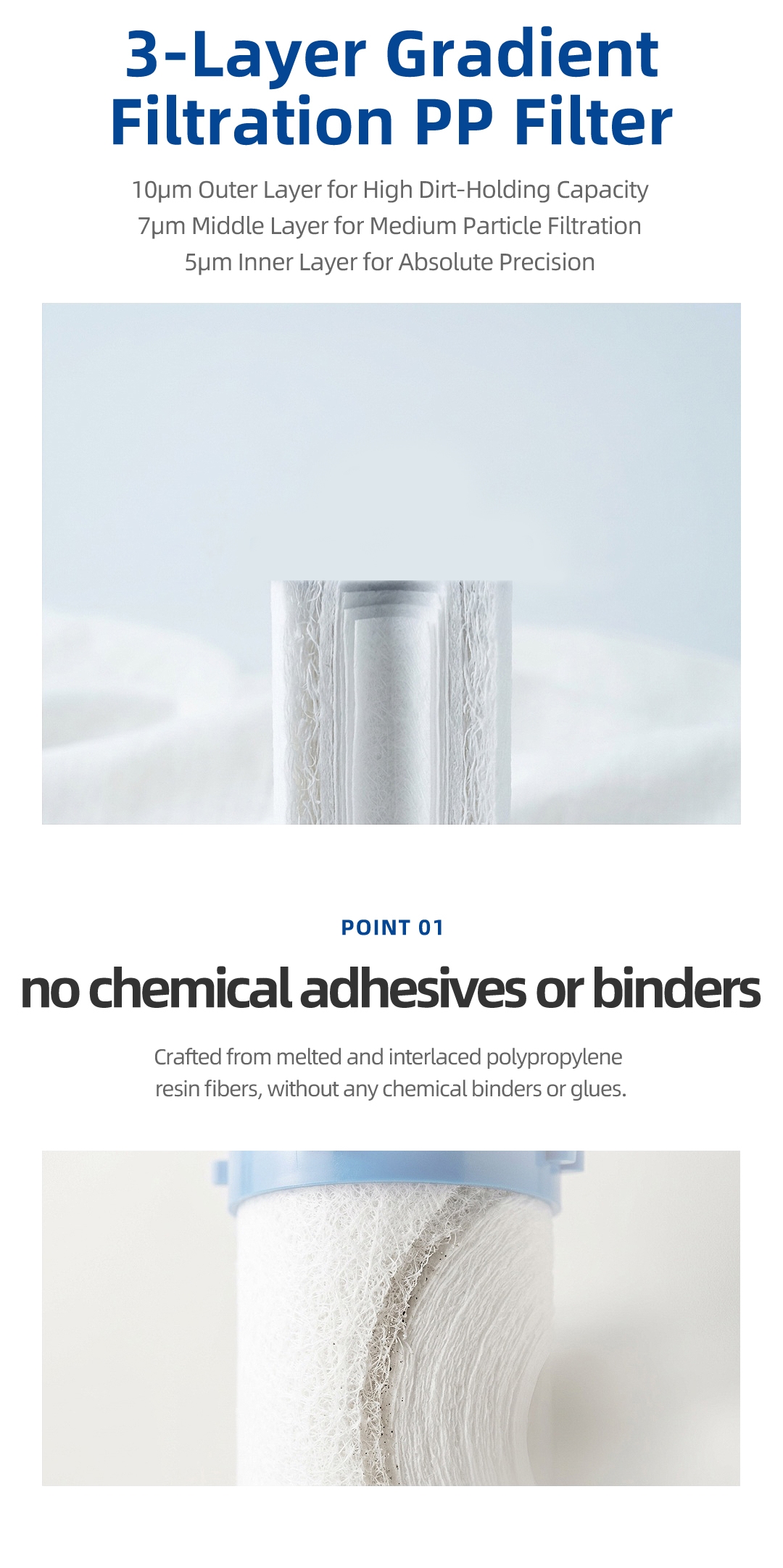
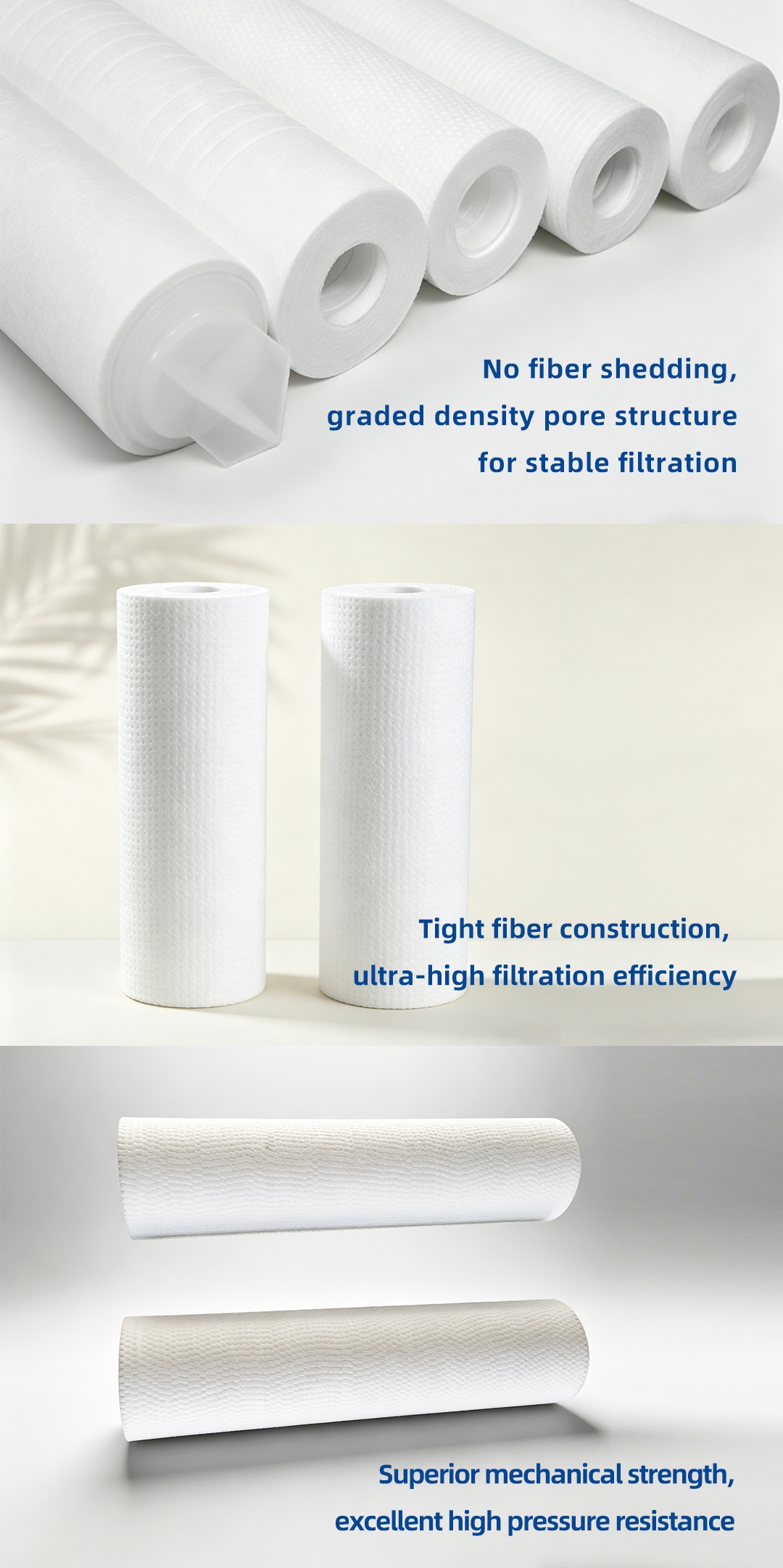
The aperture refers to the physical opening size of the fiber pores of the filter element, measured in μm. Most polypropylene melt blown filter element have a gradient structure and do not have a fixed single aperture size. Industry labels all indicate the nominal maximum aperture size. Common specifications range from 0.1 μm to 100 μm. The size of the aperture directly determines the flow performance: the larger the aperture, the higher the water flow rate; the smaller the aperture, the denser the fiber structure, and the greater the fluid resistance. Gradient spun depth filter cartridge have an externally sparse and internally dense gradually changing structure, and cannot be defined by a single aperture size for the overall specification.
2. Filtration accuracy: The actual interception ability of impurities
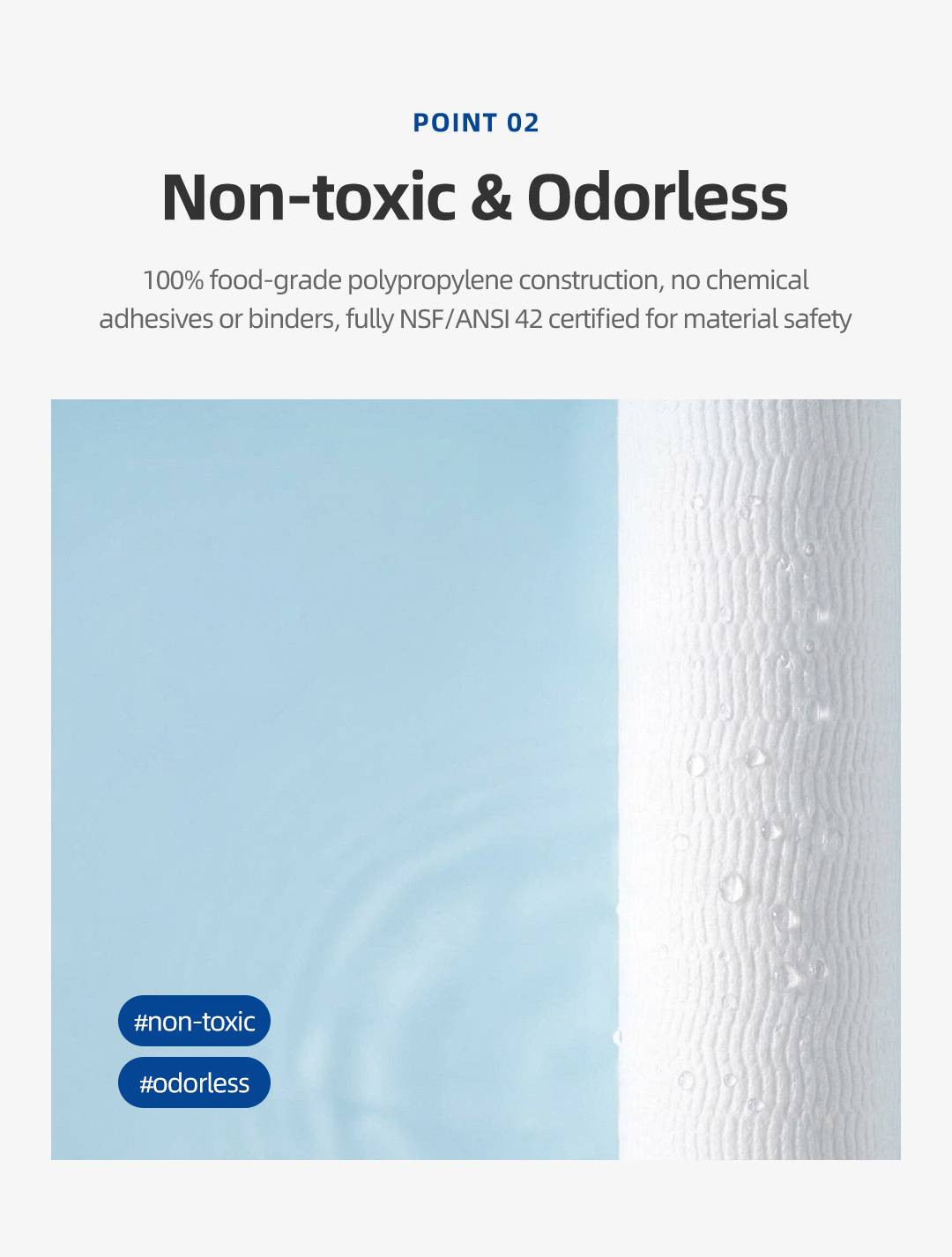
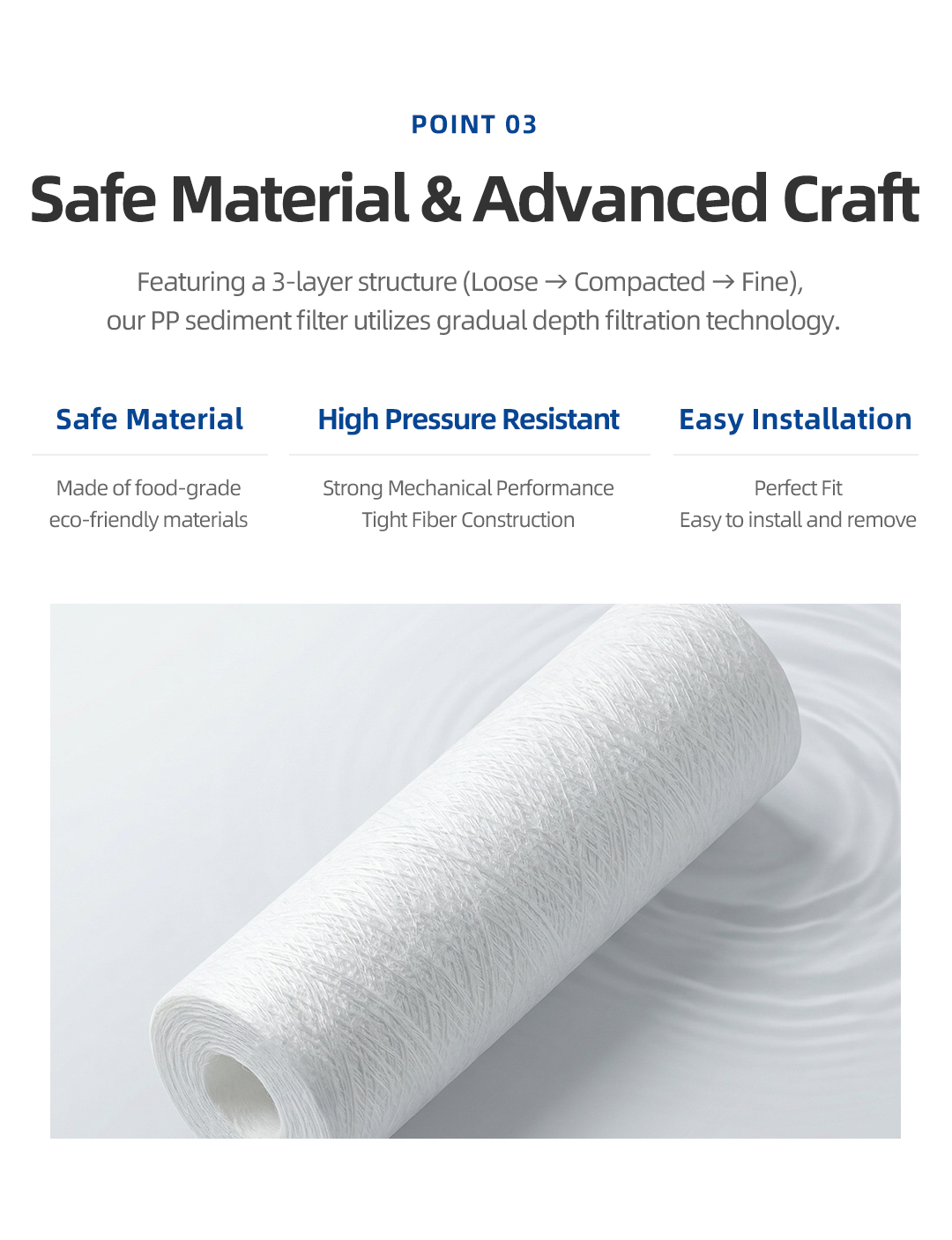
Accuracy is the parameter that users are most likely to confuse. It is not equivalent to the pore size and refers to the interception efficiency of the pp spun filter cartridge for specific particle sizes. It is the core indicator for determining the filtration effect. Industry standards define it as "nominal accuracy". For example, a 5 μm filter element represents an interception efficiency of ≥ 85% for particles ≥ 5 μm; a precision-level 1 μm filter element has an interception efficiency of ≥ 99%. There are inferior products in the market with large pore size and false accuracy. The core difference lies in: high-quality pp melt blown filter element improve accuracy through three-dimensional deep retention, while inferior homogeneous filter elements only rely on surface screening. Even with the same nominal accuracy, the actual interception capacity can vary greatly.
3. Pressure difference: The core operating condition indicator of the system
Pressure difference (ΔP) refers to the pressure difference between the inlet and outlet of the filter element. It is the only scientific indicator for determining the clogging state of the spun depth filter element. The initial pressure difference of a new filter element is extremely low, generally ≤ 0.02 MPa; as impurities are intercepted, the pores are blocked, and the pressure difference continues to rise. The industry's common replacement standard is: when the filter element pressure difference reaches 0.10–0.15 MPa, it must be replaced in time; otherwise, it will cause system flow attenuation, increased load on the RO membrane at the rear end, exceeding the pressure-bearing capacity of the pipeline, and increase equipment operating energy consumption.
4. Interlocking logic and selection key points of the three parameters
There is a strong correlation among the three parameters: under the same working conditions, the higher the accuracy (the smaller the pore size), the greater the initial pressure difference; the more suspended solids in the raw liquid, the faster the pressure difference rises. Engineering selection should follow the principle of hierarchical matching: for high turbidity water sources, a 50–200 μm filter element with a low pressure difference is selected at the front end, a 10–20 μm general filter element is used for impurity removal at the middle stage, and a 5 μm precision melt-blown filter element is standardly equipped at the RO front end. It is prohibited to directly use 1 μm or lower high-precision filter elements in high impurity conditions to avoid rapid increase in pressure difference.
Conclusion
To understand the three core parameters, the key is to distinguish the definitions of pore size and accuracy, and use pressure difference as the basis for operation. Reasonable matching of parameter combinations can not only stabilize the effluent water quality but also extend the service life of the polypropylene melt blown filter element by more than 30%, which is a key means for energy saving and cost reduction in the filtration system.