

In the field of precise fluid purification, 0.22μm is the industry-recognized critical precision for sterile filtration, and it is also the core filtration standard for pharmaceutical and semiconductor terminal processes. Compared to PES and nylon pleated membrane filter element of the same precision, the 0.22μm PTFE sterile filter element, with its superior chemical inertness, high-temperature sterilization resistance, and low leaching characteristics, has become the optimal solution for high-cleanliness and corrosive conditions in terminal filtration, and is widely used in key process nodes of two high-end core industries.
The core value of the 0.22μm precision lies in precisely intercepting bacteria, yeast, and ultra-fine colloidal particles in the medium, achieving sterile fluid treatment. Conventional folding filter element tend to swell and break down under strong corrosive and high-temperature conditions, resulting in failure of sterilization and secondary contamination of the medium. However, the PTFE material is known as the "plastic king", possessing a full range of acid and alkali resistance, organic solvent resistance, and strong oxidation resistance. Combined with a uniform microporous membrane structure, it can stably achieve physical sterilization while maintaining high throughput, avoiding the risk of medium contamination caused by chemical sterilization.
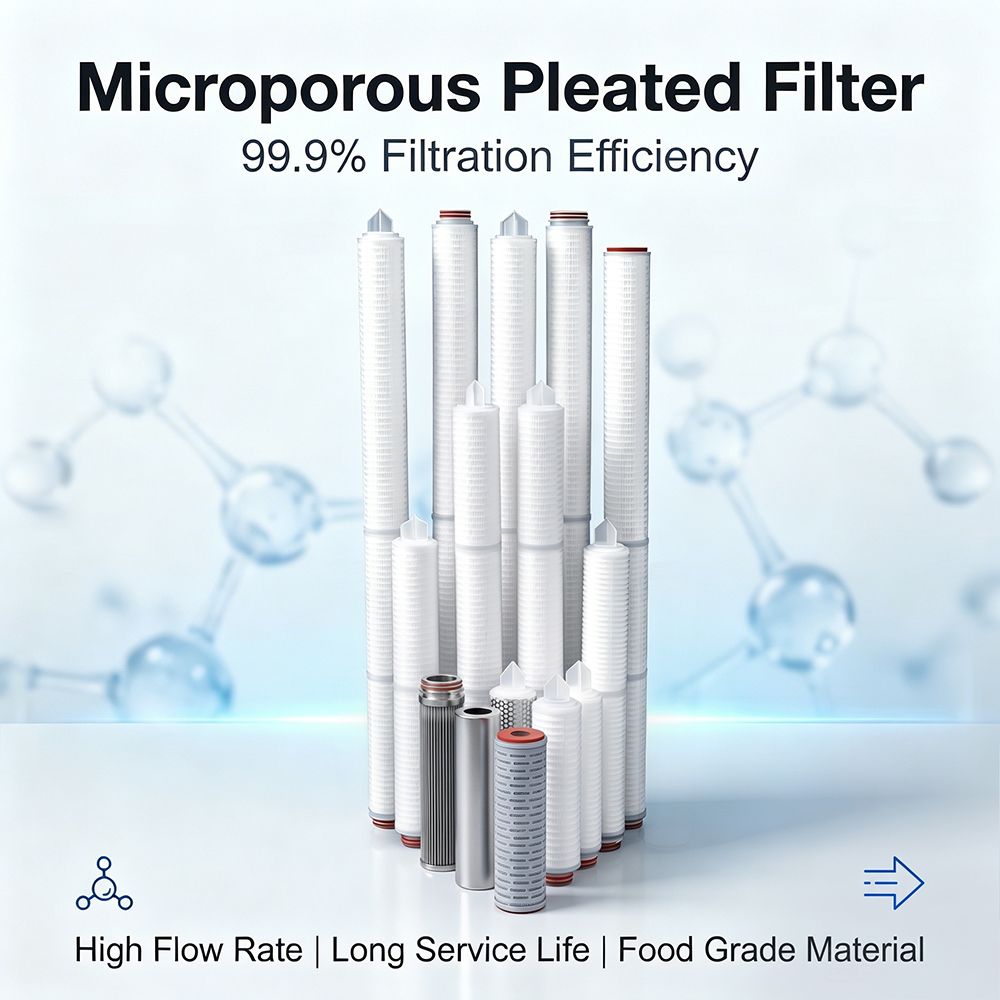
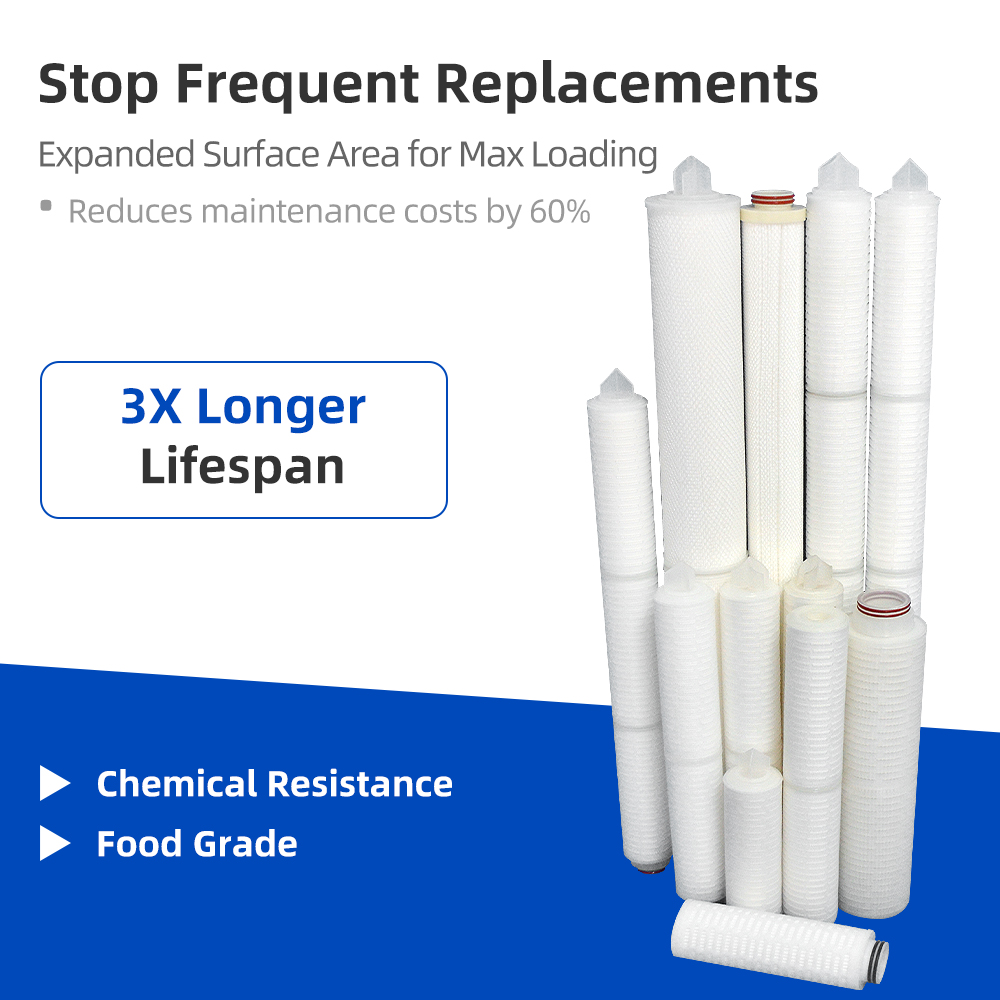
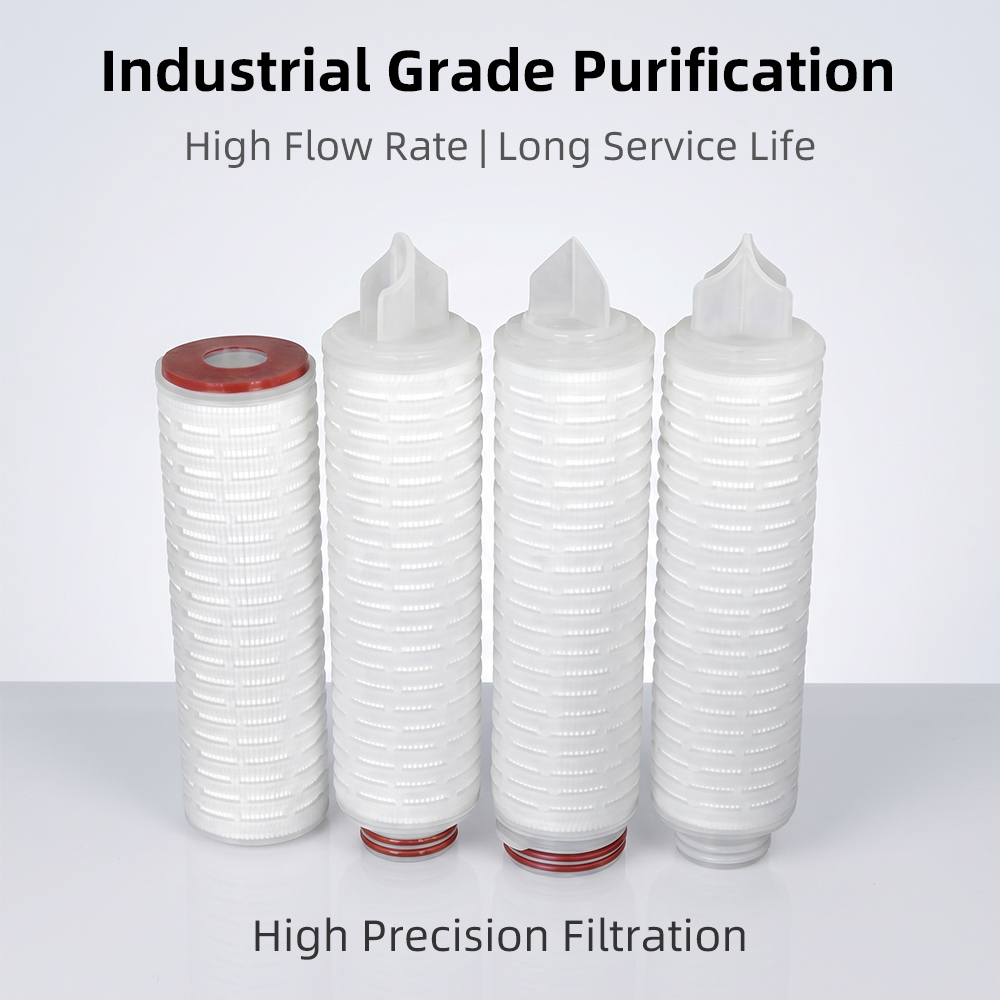
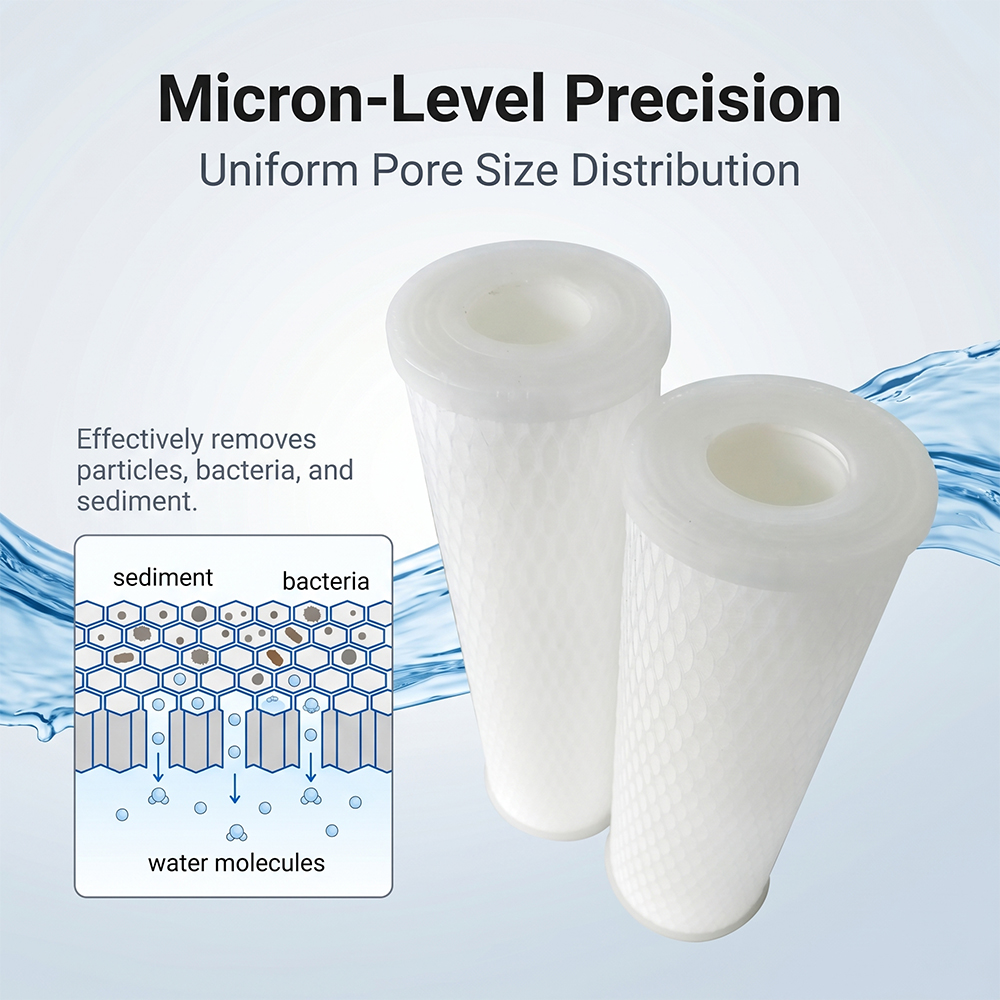
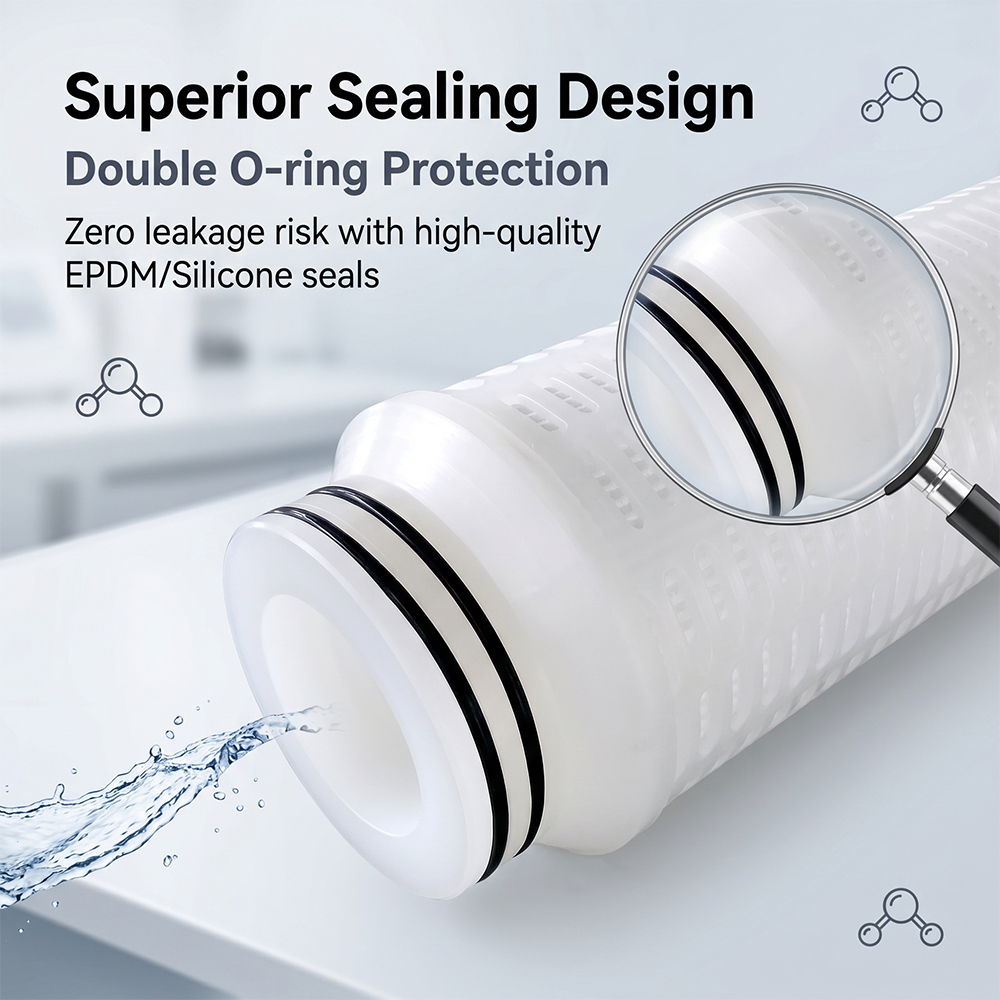
In the terminal filtration of the pharmaceutical industry, this filter element is a necessary consumable for sterile production. The hydrophilic 0.22μm PTFE filter element is mainly used for terminal sterilization of injection water, sterile liquid, biological preparations, and vitamin solutions, effectively trapping microorganisms and trace impurities; the hydrophobic style is mostly used for breathing devices in batching tanks and fermentation tanks, achieving sterile protection for air intake and exhaust. The filter element supports 121℃ repeated steam online sterilization, has no adhesive hot-melt welding structure to prevent organic substance leaching, and fully complies with GMP sterile production standards, ensuring the production safety of injectables, eye drops, and other drugs, far exceeding the performance of conventional polypropylene pleated filter element used in general filtration scenarios.
For the semiconductor industry, the 0.22μm PTFE filter element focuses on high-purity fluid terminal refinement. In the wet process of chip manufacturing, ultra-pure water, high-purity etching liquid, stripping liquid, and photoresist dilution liquid, etc., must not contain bacteria, micro-particles, and metal ions. This filter element can withstand various corrosive electronic chemicals, intercept nanoscale colloids and microbial contaminants in the process fluid, and prevent process defects in wafer etching and coating, helping to improve chip production yield and meet semiconductor electronic-grade cleanliness standards, which cannot be achieved by ordinary pp pleated filter element with poor chemical stability.
Compared to traditional sterilization Pp filter Element, this solution has outstanding core advantages: a fully hot-melt no-leaching structure is suitable for high-purity media, the hydrophilic and hydrophobic dual models cover liquid and gas filtration, the ability to withstand repeated sterilization significantly reduces the cost of filter element replacement, and the folded structure improves filtration throughput and reduces equipment operating pressure difference. It balances sterilization effectiveness, process compatibility, and production economy.
In summary, the 0.22μm PTFE sterile filter element precisely meets the core requirements of pharmaceutical sterile compliance and semiconductor high-purity processes. Compared to traditional folding filter element, this solution addresses the shortcomings of poor corrosion resistance, unstable sterilization, and leaching. As a key terminal filtration solution, it has become the core filter consumable for ensuring fluid cleanliness and controlling product quality in high-end manufacturing.